

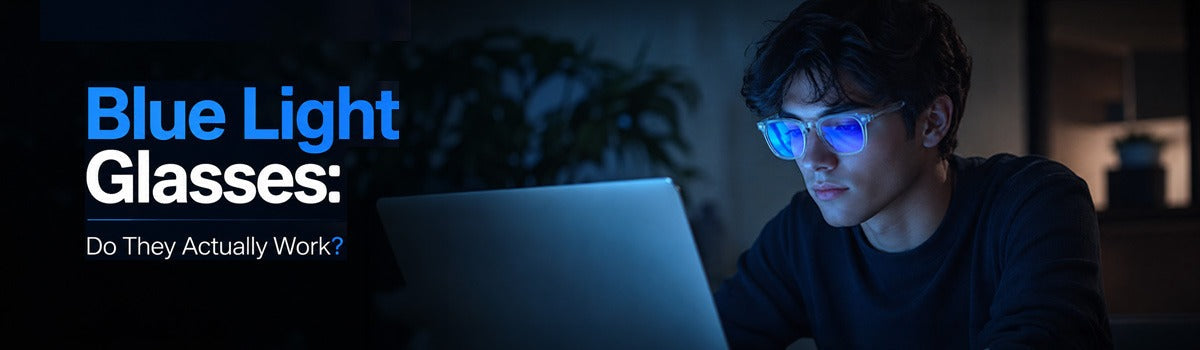
Blue Light Glasses: Do They Actually Work?
Separating fact from fiction — and finding out what's really straining your eyes
You've seen them everywhere. On your colleague's desk, in your Instagram feed, in every online eyewear store — blue light glasses are one of the biggest eyewear trends of the last few years. Brands swear by them. Influencers promote them. Millions of people wear them religiously every time they open a laptop.
But do they actually work?
It's a fair question — and one that deserves an honest, well-researched answer. So let's break it all down, from the science of blue light to whether those trendy frames are genuinely protecting your eyes or simply looking good while doing very little.
What Exactly Is Blue Light?
Before we can answer whether blue light glasses work, we need to understand what blue light actually is.
Light is made up of different wavelengths, each corresponding to a different color. Blue light sits at the higher-energy end of the visible light spectrum — wavelengths roughly between 400 and 490 nanometers. Because of its shorter wavelength, blue light scatters more easily than other light, which is part of why the sky appears blue.
Here's the important part: the sun is the single largest source of blue light on the planet. By a massive margin. The amount of blue light emitted by your phone, laptop, or TV is a tiny fraction of what you're exposed to just by stepping outside on a sunny afternoon.
So why are we so worried about screens? That's where things get interesting.
The Rise of Screen Time — And the Rise of Eye Strain
The concern around blue light from screens isn't really about the quantity of blue light — it's about proximity and duration.
When you're working on a laptop for eight hours, scrolling through your phone before bed, or binge-watching a series late at night, you're holding a bright light source inches from your face for extended periods. That's a relatively new behavior in human history, and our eyes weren't exactly designed for it.
The result? A very real and very common condition called digital eye strain — also known as Computer Vision Syndrome. Symptoms include:
- Dry, irritated eyes
- Blurred or double vision
- Headaches, especially around the temples and forehead
- Neck and shoulder tension
- Difficulty focusing after long screen sessions
- Sensitivity to light
Sound familiar? You're not alone. Studies suggest that over 60% of people who regularly use digital devices experience some form of digital eye strain. It's one of the most common complaints in modern workplaces.
So What Do Blue Light Glasses Actually Do?
Blue light glasses — also called blue light blocking glasses or computer glasses — are fitted with lenses that are designed to filter out or block a portion of blue light emitted by screens. They typically have a slight yellow or amber tint (though many modern versions appear completely clear) that absorbs blue wavelengths before they reach your eyes.
The promise is straightforward: less blue light hitting your eyes means less strain, fewer headaches, better sleep, and long-term protection from potential eye damage.
That sounds compelling. But here's where the science gets a little complicated.
What Does the Research Actually Say?
This is the part most eyewear brands quietly skip over — so let's be upfront about it.
The evidence on blue light glasses is genuinely mixed.
Some studies have found that blue light filtering lenses can reduce certain symptoms of digital eye strain, particularly headaches and light sensitivity. A handful of users report meaningful improvements in sleep quality when wearing them in the evening, which aligns with what we know about blue light's effect on melatonin — the hormone that regulates sleep.
However, several large-scale studies and optometric organisations — including the American Academy of Ophthalmology — have stated that there is currently no conclusive scientific evidence that blue light from screens causes direct damage to the eyes. They've also noted that blue light blocking glasses have not been proven to reduce eye strain significantly more than simply adjusting your screen habits.
In other words: the jury is still out, and the science hasn't caught up with the marketing — at least not entirely.
Then Why Do So Many People Feel Better Wearing Them?
This is a genuinely important question — and the answer is more nuanced than "it's all in your head."
First, there's the anti-reflective coating factor. Most quality blue light glasses also come with anti-reflective or anti-glare coatings. These coatings reduce the harsh reflections that bounce off screens and surrounding surfaces — and this has fairly strong evidence behind it for reducing eye strain. It's possible that much of the benefit people experience comes from the coating, not the blue light filtering itself.
Second, there's the posture and awareness effect. People who invest in blue light glasses tend to become more mindful of their screen habits overall. They take more breaks, adjust their monitor brightness, and sit at better distances from their screens. These behavioral changes alone can dramatically reduce eye strain — regardless of the lenses.
Third, there is a real blue light and sleep connection. Even if the eye damage claims are overstated, blue light's effect on circadian rhythm is well-documented. Exposure to blue light in the evening suppresses melatonin production, signaling to your brain that it's still daytime. Wearing blue light glasses in the two to three hours before bed does have reasonable scientific support for improving sleep onset — and better sleep means your eyes recover better overnight.
The Real Culprit: Blinking Less Than You Should
Here's a fact that often gets buried under the blue light debate — and it might be the most important one in this entire article.
When you stare at a screen, you blink significantly less than normal.
Under normal circumstances, humans blink around 15 to 20 times per minute. Studies have found that during screen use, that rate drops to as low as 5 to 7 times per minute. Blinking is what keeps your eyes lubricated and refreshed. When you stop doing it enough, your eyes dry out — leading to irritation, redness, blurry vision, and fatigue.
No pair of glasses — blue light blocking or otherwise — can fix a blinking problem. But understanding this gives you a powerful, free tool to reduce eye strain immediately.
The 20-20-20 Rule: Simple, Free, and Genuinely Effective
If you take nothing else from this article, take this.
Optometrists widely recommend the 20-20-20 rule as one of the most effective ways to combat digital eye strain:
Every 20 minutes, look at something 20 feet away for at least 20 seconds.
This gives your eye muscles a chance to relax, resets your blink rate, and reduces the cumulative fatigue that builds up during long screen sessions. It costs nothing, requires no special equipment, and has solid evidence behind it.
Pair this habit with good screen hygiene — proper brightness settings, a monitor at arm's length, good ambient lighting — and you'll likely notice a significant difference, with or without blue light glasses.
Should You Still Buy Blue Light Glasses?
Honestly? For many people, yes — with realistic expectations.
Here's a practical way to think about it:
Buy them if:
- You spend 6+ hours a day in front of screens
- You regularly experience headaches or eye fatigue after screen use
- You use your phone or laptop within two hours of going to bed and have trouble sleeping
- You want the added benefit of anti-reflective coating in a stylish frame
- They make you more mindful of taking screen breaks
Don't expect them to:
- Completely eliminate eye strain on their own
- Replace good screen habits and regular breaks
- Prevent long-term eye disease (current evidence doesn't support this claim)
- Work magically without any other lifestyle adjustments
Think of blue light glasses the way you'd think of a good ergonomic chair. Will it transform your health overnight? No. But paired with good posture, regular movement, and mindful habits, it's a worthwhile investment in your daily comfort.
Choosing the Right Blue Light Glasses
If you've decided to give them a try, here's what to look for:
Lens quality matters most. Look for lenses that filter at least 30–50% of blue light in the 400–450nm range — this is where blue light's sleep-disrupting effects are most concentrated. Many cheap options filter very little despite bold marketing claims.
Anti-reflective coating is non-negotiable. Whatever blue light filtering the lenses offer, make sure they also have a solid anti-glare coating. This is arguably more important than the blue light filter itself for daily comfort.
Frame fit affects comfort during long wear. If you're wearing these for 8 hours a day, an ill-fitting frame becomes uncomfortable fast. Look for lightweight materials — thin acetate or flexible TR90 plastic — and frames that sit properly on your nose without pinching.
You don't need to spend a fortune. Quality blue light glasses don't require a designer price tag. At #HashtagEyewear, we believe protective eyewear should be accessible — our blue light collection starts at prices that won't make your wallet hurt as much as your screen does.
The Verdict
Blue light glasses are not a miracle cure — but they're not a scam either. The truth, as it usually does, lives somewhere in the middle.
The science on blue light and direct eye damage is still evolving, and the claims made by some brands are ahead of the evidence. However, the benefits of reduced glare, improved sleep when worn in the evening, and the simple act of being more intentional about your eye health are all real and worth considering.
The smartest approach? Combine blue light glasses with better screen habits — follow the 20-20-20 rule, blink more consciously, adjust your screen brightness, and take proper breaks. Do all of that, and your eyes will thank you — with or without the glasses.
But if you're going to wear glasses anyway, they might as well look great.
Quick Eye Health Tips to Start Today
- Follow the 20-20-20 rule religiously
- Reduce screen brightness to match your room's ambient light
- Keep your monitor at arm's length — roughly 50 to 70 cm from your face
- Use night mode or warm display settings after 7 PM
- Stay hydrated — dehydration worsens dry eyes
- Blink intentionally during screen use
- Get your eyes checked at least once a year
Your eyes work hard for you every single day. Return the favour.
Stay clear. Stay comfortable. Stay stylish. 🕶️