


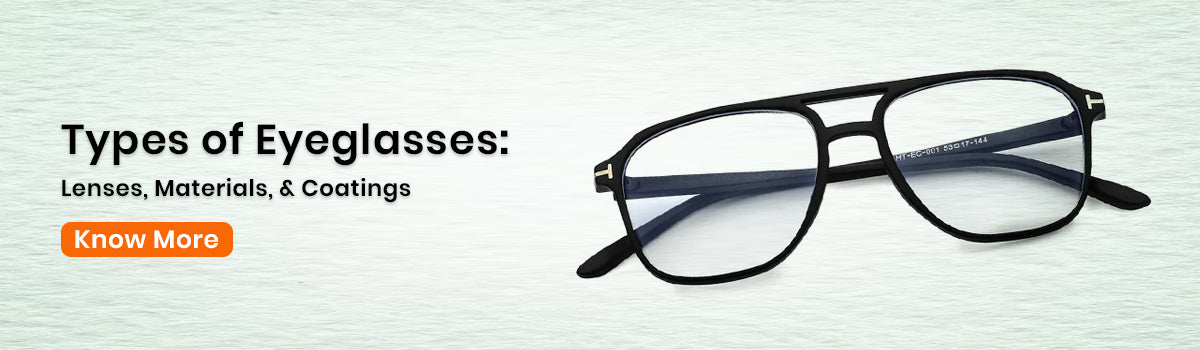
Types of Eyeglasses: A Complete Guide to Lenses, Materials, and Coatings
Choosing the right eyeglasses is not just about frames—it’s also about selecting the correct lens type, material, and protective coatings that suit your vision and lifestyle. With advancements in eyewear technology, modern eyeglasses now offer features such as UV-Protected lenses, Blue Block technology, Polarized glare control, and Photochromatic adaptability.
This guide will help you understand the different types of eyeglasses so you can make an informed decision for clear, comfortable, and protected vision.
Types of Eyeglass Lenses Based on Vision Needs
Eyeglass lenses are designed to correct different vision requirements depending on how many viewing distances need support.
Single Vision Lenses
Single vision lenses contain one uniform prescription across the entire lens. They are commonly used to correct:
-
Near vision (reading)
-
Distance vision
These lenses are ideal for individuals with straightforward vision correction needs.
Bifocal Lenses
Bifocal lenses feature two prescription strengths in one lens:
-
Upper section for distance vision
-
Lower section for near vision
A visible line separates the two areas. Bifocals are often recommended for people experiencing age-related vision changes such as presbyopia.
Progressive (Multifocal) Lenses
Progressive lenses provide a smooth, gradual transition between distance, intermediate, and near vision—all without visible lines. They offer:
-
Natural visual experience
-
Improved aesthetics
-
Seamless focus at all distances
Progressive lenses are a popular modern alternative to bifocals and trifocals.
Specialty Eyeglass Lenses
Some eyeglasses are designed to correct specific visual conditions.
Prism Lenses
Prism lenses are prescribed for conditions such as double vision. They help align images correctly by adjusting the way light enters the eyes, improving visual coordination.
Toric Lenses
Toric lenses are specially shaped single-vision lenses used to correct astigmatism. Their unique curvature ensures sharper and more stable vision for individuals with uneven corneas.
Eyeglass Lens Materials Explained
Lens material plays a major role in comfort, durability, and appearance.
CR-39 Plastic Lenses
CR-39 is a widely used and budget-friendly lens material that offers:
-
Good optical clarity
-
Lightweight feel
However, it can be thicker for strong prescriptions and offers lower impact resistance compared to newer materials.
Polycarbonate Lenses
Polycarbonate lenses are highly impact-resistant and naturally UV-Protected, making them ideal for:
-
Kids’ glasses
-
Safety eyewear
They are thinner and lighter than standard plastic lenses.
Trivex Lenses
Trivex lenses offer similar strength to polycarbonate but with enhanced optical clarity. They are:
-
Extremely lightweight
-
Impact-resistant
-
Comfortable for all-day wear
High-Index Lenses
High-index lenses are designed for stronger prescriptions. They bend light more efficiently, resulting in:
-
Thinner lenses
-
Lighter weight
-
Better cosmetic appearance
Glass Lenses
Glass lenses provide excellent visual clarity and scratch resistance, but they are heavier and more fragile. Due to safety concerns, they are less commonly used today.
Lens Coatings and Treatments for Better Eye Protection
Modern eyeglasses can be enhanced with specialized coatings to improve performance and eye health.
Anti-Reflective (AR) Coating
Also known as anti-glare coating, AR treatment reduces reflections from screens and lights, improving:
-
Night driving vision
-
Computer usage comfort
-
Overall lens appearance
Scratch-Resistant Coating
This coating strengthens the lens surface, helping minimize everyday scratches and extending lens life.
UV-Protected Coating
UV-Protected lenses shield your eyes from harmful ultraviolet rays, reducing the risk of long-term eye damage. Many polycarbonate and high-index lenses offer built-in UV protection.
Photochromatic Lenses
Photochromatic lenses automatically adjust to light conditions—clear indoors and dark outdoors. They function as both regular eyeglasses and sunglasses, offering convenience and continuous eye protection.
Blue Block Lenses
Blue Block lenses filter harmful blue light emitted from digital screens. They are especially beneficial for:
-
Office workers
-
Students
-
Gamers
These lenses help reduce digital eye strain, headaches, and visual fatigue.
Polarized Lenses
Commonly used in sunglasses, Polarized lenses reduce glare from reflective surfaces such as roads, water, and snow. They enhance visual clarity and comfort during outdoor activities.
Hydrophobic and Oleophobic Coatings
These advanced coatings repel water, dust, and fingerprints, making lenses easier to clean and maintain.
Final Thoughts
Understanding the different types of eyeglasses, from lens designs and materials to advanced coatings like UV-Protected, Blue Block, Polarized, and Photochromatic lenses, helps you choose eyewear that perfectly fits your vision needs and lifestyle.
Whether you need everyday eyeglasses, computer glasses, or protective eyewear, selecting the right combination ensures clear vision, comfort, and long-term eye health.



